

The tree had been part of the property for as long as anyone could remember.
A tall maple that shaded half the yard during summer. Kids climbed it. Hammocks hung beneath it. Every fall it dropped enough leaves to keep someone busy for days.
But over time, it started leaning.
Not dramatically. Just enough that every windstorm made the homeowner glance out the window a little longer.
Eventually, the decision was made.
The tree had to come down.
The chainsaw started early on a Saturday morning. Limbs were removed. Brush was piled. Smaller sections were stacked for firewood.
Then there was the trunk.
Twenty feet of solid hardwood lying across the lawn.
Someone kicked one of the logs and said what most people say in that moment.
“Well, that’s a lot of firewood.”
But another person asked a different question.
“What if we turned it into lumber?”
That simple question is one more property owners across Michigan’s Upper Peninsula and Northern Wisconsin are asking every year.
Many homeowners don’t realize that the trees on their property may contain valuable lumber that can be used for barns, cabins, furniture, workshops, and home improvement projects.
Instead of burning it, hauling it away, or letting it rot, you may be able to turn that tree into usable lumber right on your property.
Can Trees on Your Property Really Be Turned Into Lumber?
In many cases, yes.
Every board sitting in a lumberyard started as a tree. The difference is that someone milled it.
Many trees commonly found throughout Michigan and Wisconsin can produce beautiful, durable lumber when properly cut and processed.
Some of the best species for milling include:
- Maple
- Red Oak
- White Oak
- White Pine
- Red Pine
- Cedar
- Birch
- Walnut
- Cherry
- Ash
Whether a tree can be milled depends on several factors, including species, diameter, length, condition, and the amount of damage present.
Even trees removed because of storms, construction projects, or safety concerns may still contain large sections of usable lumber.
Why More Property Owners Are Milling Their Own Trees
Portable sawmilling has become increasingly popular because landowners are beginning to recognize the value sitting on their property.
Years ago, a removed tree often had only three outcomes:
- Firewood
- Brush pile
- Landfill
Today, portable sawmills make it possible to transform those same trees into lumber without ever leaving the property.
For many homeowners, it’s not just about saving money.
It’s about preserving something meaningful.
A tree that stood on the property for decades can become:
- A dining room table
- Cabin beams
- Mantels
- Shelving
- Benches
- Barn lumber
- Workshop projects
- Live-edge furniture
Instead of disappearing, the tree becomes part of the property’s story.
How Portable Sawmill Services Work
Traditional sawmills require logs to be transported to their facility.
For many rural properties, that’s easier said than done.
Large logs are heavy.
Moving them often requires:
- Trailers
- Tractors
- Loaders
- Extra labor
- Transportation costs
Portable sawmills solve that problem.
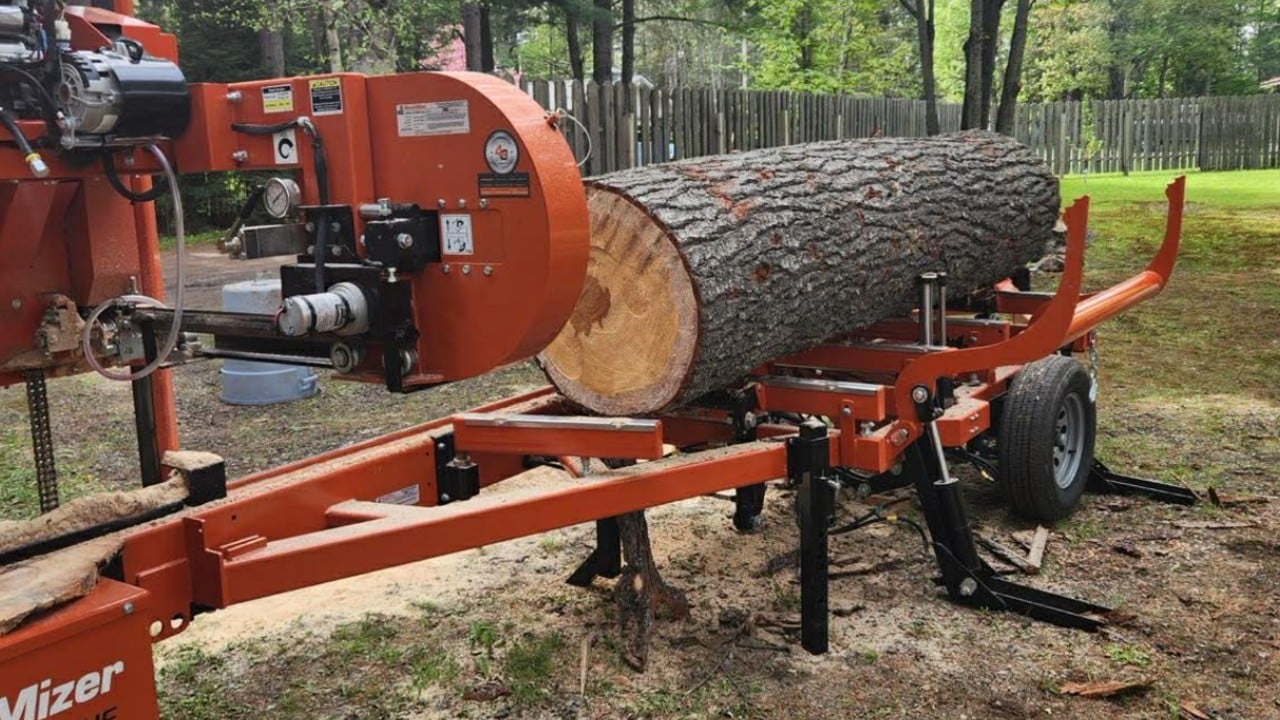
Instead of bringing the logs to the mill, the mill comes directly to the logs.
The portable sawmill is transported to your property where logs are cut into boards, beams, slabs, or custom lumber onsite.
Benefits include:
Less Log Handling
Logs remain where they are.
Reduced Transportation Costs
There’s no need to haul heavy logs long distances.
Custom Lumber Dimensions
Boards can be cut specifically for your project.
Better Utilization of Trees
Wood that might otherwise be discarded can be turned into usable building materials.
What Size Trees Are Best for Lumber?
One of the most common questions property owners ask is:
“What size tree do I need to make lumber?”
While smaller trees can sometimes be milled, larger logs typically produce the best results.
As a general guideline:
- 12-inch diameter logs often produce usable boards.
- 16- to 24-inch diameter logs are excellent candidates.
- Large hardwood logs can produce substantial amounts of lumber.
Length matters too.
Many logs are cut into lengths ranging from 8 to 16 feet depending on the intended use.
Every log is different, which is why having an experienced sawmill operator evaluate the wood is important.
How Much Lumber Can One Tree Produce?
The answer surprises many people.
A single mature tree can produce a significant amount of usable lumber.
The amount depends on:
- Diameter
- Length
- Species
- Internal defects
- Milling strategy
For example, a healthy hardwood log measuring 16 inches in diameter and 12 feet long may produce well over 100 board feet of lumber.
Larger logs can produce several hundred board feet.
That means one tree may provide enough material for multiple projects.
Many property owners are shocked when they see the stack of boards that comes from a single log.
The First Cut Changes Everything
If you’ve never watched a tree become lumber, the first cut is unforgettable.
The log is loaded onto the mill.
The blade begins moving.
The outer slab falls away.
Suddenly, the inside of the tree is visible for the first time.
Rich grain patterns emerge.
Colors appear.
Character marks reveal decades of growth.
What looked like an ordinary log moments earlier begins turning into beautiful boards.
It’s often the moment people realize they’re not simply getting rid of a tree.
They’re creating something useful.
The Best Trees for Lumber in Michigan and Wisconsin
Northern forests are filled with species that produce outstanding lumber.
Maple
Maple is one of the most sought-after hardwoods in the region.
It’s commonly used for:
- Furniture
- Cabinets
- Flooring
- Workbenches
Oak
Oak produces strong, durable lumber that performs well in:
- Furniture
- Beams
- Barn construction
- Interior woodworking
Cedar
Cedar is naturally resistant to decay and insects.
Popular uses include:
- Outdoor furniture
- Fencing
- Siding
- Garden projects
Pine
Pine is widely used for:
- Framing
- Sheds
- Cabins
- Agricultural buildings
Birch
Birch provides attractive grain patterns and is often used in furniture and interior projects.
What Happens After a Log Is Milled?
Many homeowners think lumber is ready to use immediately after it’s cut.
Not quite.
Freshly milled lumber contains moisture.
Before most projects, lumber should be properly dried.
Air Drying
Boards are stacked with spacers, allowing air to circulate.
A common rule of thumb is approximately one year of drying time per inch of thickness, although weather conditions can affect this timeline.
Kiln Drying
Kiln drying accelerates moisture removal and helps prepare lumber for furniture, cabinetry, and interior projects.
The right drying method depends on how the wood will eventually be used.
Common Mistakes Property Owners Make
If you’re planning to turn trees into lumber, avoiding these mistakes can save time and preserve lumber quality.
Letting Logs Sit Too Long
Fresh logs generally produce the best results.
The longer they sit, the greater the chance of insect damage, staining, rot, and cracking.
Leaving Logs Directly on the Ground
Ground contact can introduce moisture and decay.
Cutting Logs Into Random Lengths
Proper lengths often produce more usable lumber and less waste.
Assuming Every Log Is Firewood
Many valuable logs get burned simply because nobody realized they could be milled.
What People Build With Lumber From Their Own Trees
One of the most rewarding parts of portable sawmilling is seeing what homeowners create.
Projects often include:
Barns and Pole Buildings
Custom lumber is frequently used for agricultural structures.
Hunting Camps and Cabins
Many landowners use lumber from their property to improve recreational buildings.
Live-Edge Tables
Live-edge slabs remain one of the most popular uses for hardwood logs.
Garage and Workshop Storage
Custom shelving and workbenches are common projects.
Mantels and Decorative Beams
A tree removed from the property can become a centerpiece inside the home.
Why Milling a Tree Often Makes More Sense Than Firewood
Firewood certainly has value.
But a mature hardwood tree may have much greater potential.
Think about it this way.
That tree may have spent 40, 50, or even 80 years growing.
Turning it into lumber extends its usefulness for decades to come.
A stack of boards can become:
- Furniture
- Home improvements
- Structural lumber
- Family heirlooms
Many homeowners find that far more meaningful than feeding it into a wood stove.
Frequently Asked Questions
Can storm-damaged trees be milled?
Often, yes. It depends on the location and severity of the damage.
Can dead trees be milled?
Sometimes. The condition of the wood determines whether milling is practical.
Do I need heavy equipment?
Not always. Every property is different, and access varies by location.
Is portable sawmilling available in rural areas?
Yes. Portable sawmills are specifically designed to bring milling services directly to the property.
Do all trees produce good lumber?
Some species produce more valuable and versatile lumber than others, but many common Michigan and Wisconsin trees can be milled successfully.
Portable Sawmill Services Across Michigan’s Upper Peninsula and Northern Wisconsin
HD Cuts provides portable sawmill services throughout the Upper Peninsula of Michigan and Northern Wisconsin.
We frequently work with homeowners, farmers, cabin owners, hunters, and property managers who want to make use of trees already on their land.
Whether you’re dealing with:
- Storm-damaged trees
- Land-clearing projects
- Timber from construction sites
- Mature hardwoods
- Cabin property improvements
we can help determine whether your logs are suitable for milling.
Is There Lumber Sitting on Your Property Right Now?
Every year, valuable logs are burned, hauled away, or left to rot simply because property owners don’t realize what’s inside them.
The materials for your next table, barn, workshop, cabin, or home project may already be lying in your yard or woods.
Before turning those logs into firewood, consider what else they could become.
If you have trees or logs on your property and want to explore the possibilities, contact HD Cuts today.
Our portable sawmill services bring the mill directly to your property throughout Michigan’s Upper Peninsula and Northern Wisconsin, helping you transform logs into lumber that can serve a purpose for decades to come.